When travelers plan a trip to Northern Thailand, the typical itinerary almost always includes iconic shopping spots like Warorot Market (Kad Luang) or the bustling Siri Wattana Market (Kad Thanin). While these commercial hubs offer fantastic souvenirs, dried spices, and popular street snacks, they only capture a snippet of the region’s authentic culinary soul. Beyond the tourist-frequented thoroughfares lies a network of vibrant neighborhood bazaars where everyday Lanna life unfolds at dawn.
To truly understand Northern Thai food culture, one must venture where local homemakers, street food vendors, and Buddhist monks gather. Exploring an authentic local fresh market Chiang Mai offers an immersive cultural experience—a sensory explosion of aromatic herbs, rare jungle produce, and time-honored Lanna delicacies. If you are seeking genuine off the beaten path Chiang Mai experiences, here are 5 hidden fresh markets that tourists rarely visit, but absolutely should.
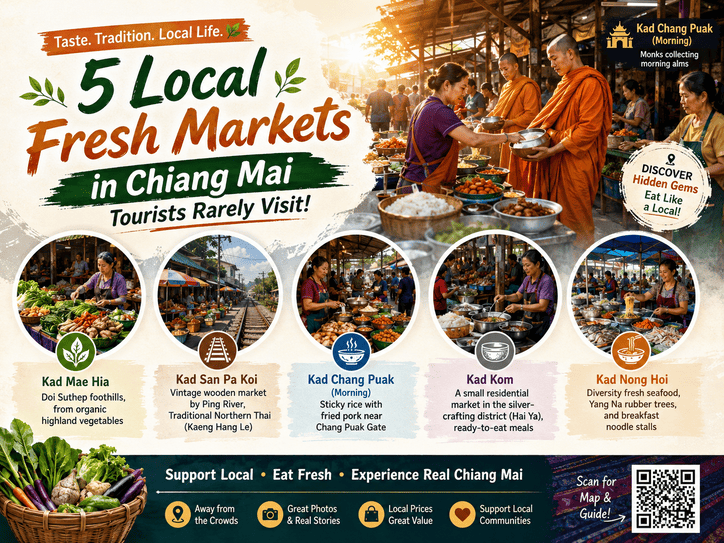
1. Kad Mae Hia (Mae Hia Market)
Situated in the southern outskirts of the city near the foothills of Doi Suthep-Pui National Park, Kad Mae Hia is a neighborhood gem cherished by residents of Hang Dong. Unlike urban markets cater-tailored for tourists, Mae Hia remains an unpretentious culinary sanctuary focusing entirely on local consumption and high-quality seasonal produce.
At sunrise, the market bursts into life with vendors selling organic highland vegetables brought directly from nearby Royal Project farms and indigenous village gardens. It is one of the best places in town to sample authentic Sai Oua (Northern Thai herbal sausage) cooked over charcoal, as well as seasonal delicacies like Hed Pho (puffball mushrooms) and fresh bamboo shoots during the monsoon months.
- Best Time to Visit: 06:00 AM – 09:00 AM (Morning peak) or 04:00 PM – 07:00 PM
- Location: Hang Dong Road, Mae Hia Sub-district, Chiang Mai
- Must-Try Food: Freshly grilled Sai Oua, Nam Prik Ong with steamed seasonal veggies
- Atmosphere: Clean, spacious, neighborhood-centric with ample parking
Visiting Mae Hia provides an unmatched opportunity for Chiang Mai food exploration without the overwhelming crowds. The vendors are exceptionally friendly, often eager to explain how unusual herbs and chili pastes are used in traditional home cooking.
2. Kad San Pa Koi (San Pa Koi Market)
Located on the eastern bank of the Ping River, just a short distance from the historical railway station, Kad San Pa Koi is one of Chiang Mai’s oldest municipal trading grounds. While neighboring Muang Mai Market draws wholesale buyers for bulk fruits and vegetables, San Pa Koi caters directly to the local households of the Wat Ket community.
Stepping into San Pa Koi feels like stepping back in time. The market features rustic wooden stalls and narrow concrete aisles filled with the earthy aromas of fermented fish paste (Pla Ra), wild basil, and roasting chilies. It is widely recognized among local foodies as a treasure trove for authentic Lanna street food Chiang Mai, offering traditional curries that are increasingly difficult to find in tourist-oriented restaurants.
- Best Time to Visit: 06:00 AM – 10:00 AM
- Location: Charoen Muang Road, Wat Ket, Chiang Mai
- Must-Try Food: Kaeng Hang Le (Pork Curry), Northern-style Larb Kua, Kanom Jeen Nam Ngiew
- Atmosphere: Vintage, nostalgic, compact, deeply local
Be sure to arrive early to witness monks receiving morning alms outside the market gates—a serene, spiritual ritual that reflects the deeply ingrained traditions of the surrounding neighborhood.
3. Kad Chang Puak (Chang Puak Morning Fresh Market)
Most travelers are familiar with the famous Chang Puak Night Market located just outside the northern city gate (home to the legendary Cowboy Hat Lady’s stewed pork leg). However, very few realize that at dawn, the indoor facility directly behind the night stalls operates as a thriving, traditional morning fresh market.
Kad Chang Puak Morning Market serves as a primary supply point for vendors inside the Old City. Because of its location, it acts as a bridge between rural farmers bringing in wild-foraged herbs from Northern mountain districts and urban cooks. Here, you will find exotic ingredients such as ant eggs (Kai Mot Daeng), edible banana flowers, and an astonishing variety of chili peppers used in Northern dip making.
- Best Time to Visit: 05:30 AM – 08:30 AM
- Location: Maneenopparat Road, Sri Phum (North Gate of Old City)
- Must-Try Food: Sticky rice with fried pork, steamed sticky rice treats, fresh soy milk
- Atmosphere: Bustling, energetic, authentic morning hustle
For travelers staying within the Old City, this is the most accessible spot to experience an authentic morning market Chiang Mai routine without needing to travel far into the suburbs.
4. Kad Kom (Pratu Kom Market)
Tucked away in the historic Hai Ya district, south of the Old City Moat, Kad Kom—often called Pratu Kom Market—is a quintessential neighborhood market that remains completely hidden from standard tourist guidebooks. This compact bazaar caters primarily to the silver-crafting community of Wualai and surrounding residential lanes.
Kad Kom is particularly famous among local gourmands for its ready-to-eat home-cooked curries sold in plastic bags (known locally as Khao Kaeng). Vendors here pride themselves on heritage family recipes handed down through generations. If you want to taste authentic Kaeng Ho (stir-fried curry with glass noodles) or Kaeng Aom (spiced organ meat soup) cooked exactly as Lanna grandmothers make it, Kad Kom is an indispensable destination.
Local Travel Tip: Kad Kom is best visited around 4:00 PM when home cooks and workers gather to buy freshly prepared dinner dishes. It offers a fascinating glimpse into the modern evening food habits of Northern Thais.
- Best Time to Visit: 03:30 PM – 06:30 PM (Evening meal market)
- Location: Suriyawong Road, Hai Ya, Chiang Mai
- Must-Try Food: Kaeng Ho, Northern Crispy Pork Belly, local sticky rice dessert pouches
- Atmosphere: Intimate, friendly, residential, non-commercial

5. Kad Nong Hoi (Nong Hoi Market)
Positioned along the historical Lamphun Road—famous for its majestic, century-old rubber trees (Yang Na)—Kad Nong Hoi serves the southeastern sector of Chiang Mai. This expansive market complex is a bustling hive of activity that operates virtually around the clock, though its morning session is by far the most vibrant.
Kad Nong Hoi is renowned for its incredible diversity of fresh seafood brought in daily from southern routes, alongside an impressive array of indigenous Northern produce. The outer perimeter is lined with breakfast stalls selling hot soybean milk, crispy Pa Tong Go (Thai donuts), and steaming bowls of Chiang Mai breakfast noodles.
- Best Time to Visit: 06:00 AM – 09:00 AM
- Location: Chiang Mai-Lamphun Road, Nong Hoi, Chiang Mai
- Must-Try Food: Freshly made Khao Soi paste, local breakfast congee, herbal drinks
- Atmosphere: Sprawling, energetic, diverse, highly authentic
Exploring Nong Hoi gives travelers a comprehensive look at how traditional trade flourishes alongside modern suburban development, offering a rich narrative for those interested in contemporary Thai culture.
Essential Etiquette & Tips for Visiting Local Markets
To ensure a respectful and rewarding experience when visiting these hidden gems Chiang Mai, keep the following travel tips in mind:
- Bring Cash in Small Denominations: Most market vendors do not accept credit cards. Keep 20, 50, and 100 Baht notes handy for easy transactions.
- Dress Respectfully: While markets are casual, dressing modestly (covering shoulders and knees) shows respect for local cultural norms, especially during morning alms hours.
- Learn Basic Thai Phrases: A simple “Sawasdee Krub/Ka” (Hello) and “Tao Rai?” (How much?) goes a long way in creating warm interactions with friendly vendors.
- Be Mindful of Foot Traffic: Morning markets are places of real business. Stay aware of your surroundings so you don’t block busy aisles or motorbikes making deliveries.
Conclusion
Stepping away from well-trodden tourist hubs and venturing into these 5 hidden markets opens a gateway to the true soul of Northern Thailand. From the fresh mountain produce at Kad Mae Hia to the historic recipes of Kad Kom, these local fresh markets offer an unforgettable immersion into authentic Lanna culture, community life, and culinary heritage. On your next visit to Chiang Mai, set your alarm early, grab a camera, and prepare to taste Northern Thailand as the locals do.