
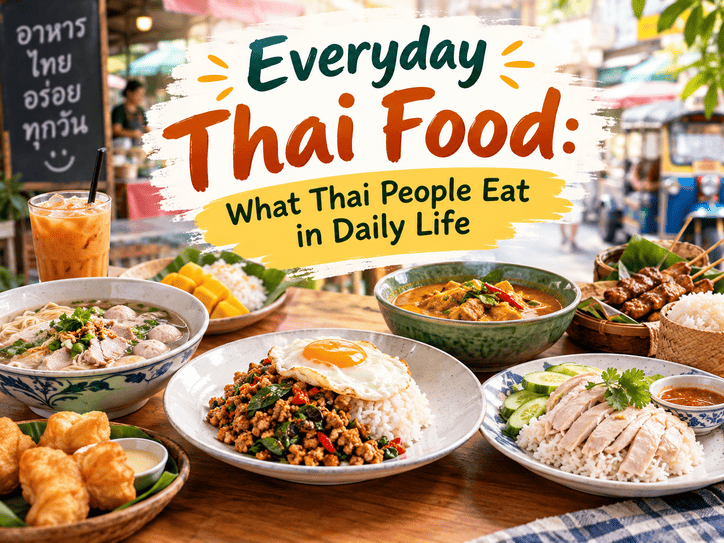
If you have never been to Thailand before, you may already know a few Thai dishes.
Pad Thai. Green curry. Tom Yum. Mango sticky rice.
But here is something many visitors discover after arriving:
Thai people don’t necessarily eat these famous dishes every day.
Everyday Thai food is often simpler, quicker and more affordable. It might be a plate of rice topped with stir-fried pork, a bowl of noodles from a small local shop, grilled pork with sticky rice in the morning, or several dishes shared around a table.
If you want to understand Thai food beyond the tourist menu, start by looking at what people actually eat in their daily lives.
Rice Is at the Heart of Everyday Thai Food
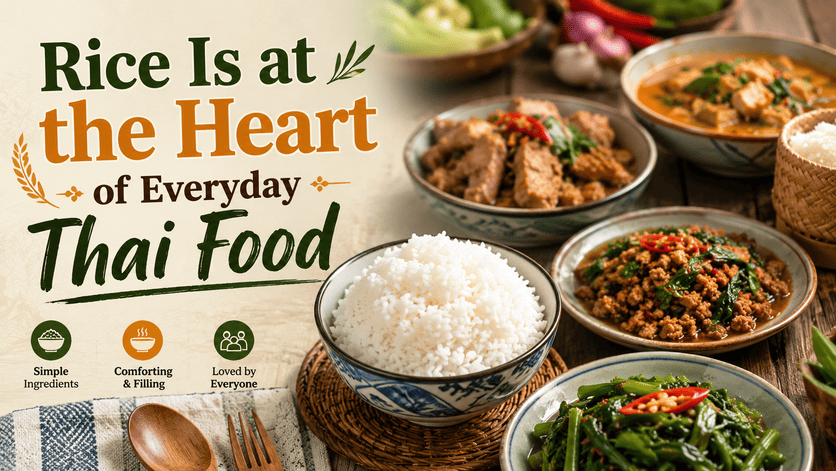
Rice is one of the most important parts of a typical Thai meal.
For many people, a simple meal can be built around rice with one main dish. This could be a stir-fried dish, curry, grilled meat, fried chicken or vegetables.
One of the most common examples is Pad Kra Pao, usually made with minced pork or chicken, garlic, chili and Thai basil, served over rice. A fried egg, known as kai dao, is often added on top.
Another everyday option is Pad Kratiem, or garlic and pepper stir-fried meat. It is usually less spicy and can be an easy choice for visitors who are still getting used to Thai flavors.
You may also come across Khao Kaeng, meaning rice served with curry or other prepared dishes. At a local curry shop, you can usually choose one or more dishes to eat with rice.
These meals are not designed as special-occasion food. They are practical, filling and easy to find.
Thai Noodles Are an Everyday Favorite
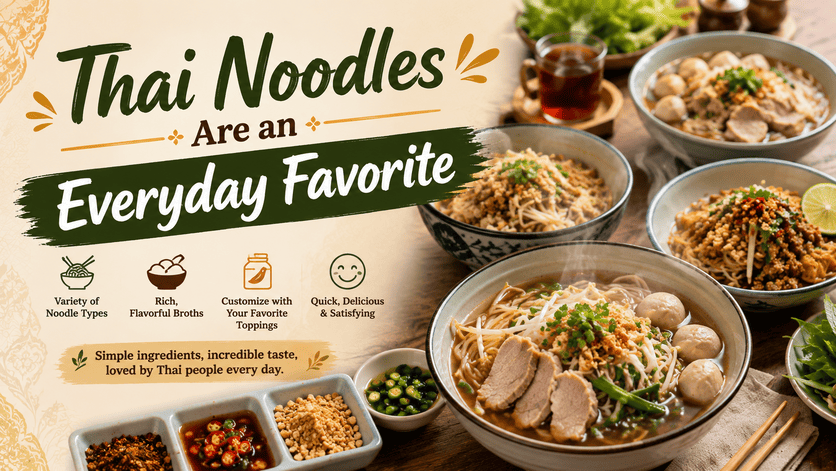
Rice is only part of the story. Noodles are another major part of everyday eating in Thailand.
A small noodle shop can be one of the easiest places for a visitor to experience local food.
Kuay Teow, or Thai noodle soup, comes in many variations. You may choose different types of noodles and different proteins, including pork, chicken, beef or meatballs.
Some people prefer their noodles with soup, while others order a dry version and mix the ingredients with seasonings.
Thai noodle shops are particularly useful for travelers because portions are often manageable and the food is prepared quickly.
You may also encounter dishes such as Kuay Jap, a peppery noodle soup often served with pork and other ingredients, or boat noodles, which are traditionally served in smaller portions.
The important thing to remember is that there is no single “Thai noodle.” Different regions and restaurants have their own styles.
What Do Thai People Eat for Breakfast?
Thai breakfast can look quite different from a typical Western breakfast.
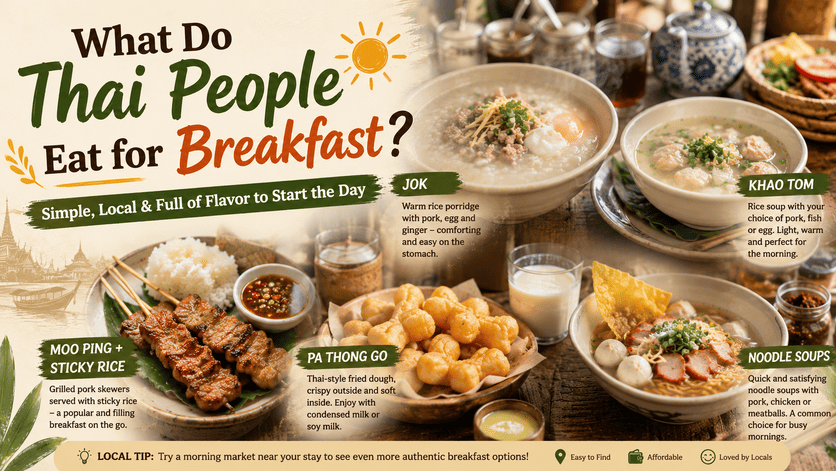
There is no single breakfast menu that everyone follows. Depending on where you are and what you prefer, breakfast might be rice porridge, noodles, grilled pork, sticky rice or something purchased from a local market.
Jok, Thai-style rice porridge, is a popular choice for a warm and filling breakfast. It is often served with minced pork, egg and other toppings.
Khao Tom, or rice soup, is another common option.
For something quick, look for Moo Ping, grilled pork skewers, often eaten with sticky rice. You can find them at morning markets, street stalls and neighborhood food vendors.
Another familiar street breakfast is Pa Thong Ko, a Thai-style fried dough that is often enjoyed with condensed milk, soy milk or a hot drink.
For visitors, exploring a Thai morning market can be one of the easiest ways to see everyday food culture in action.
Food Courts: Local Food & Reommended Michelin
If you want to experience everyday Thai food without feeling overwhelmed, try a Thai food court.
Food courts are common in shopping malls, department stores, office areas and transportation hubs. They offer a wide variety of local dishes in one place.
You might find:
- Rice and curry
- Stir-fried rice dishes
- Noodles
- Chicken and pork dishes
- Soups
- Vegetarian meals
- Desserts and drinks
Food courts are especially convenient for first-time visitors because you can look around before deciding what to eat.
Some modern food courts use payment cards or stored-value systems rather than paying each vendor directly. The exact system varies by location.
The biggest advantage is choice. If one person wants noodles and another wants rice and curry, everyone can eat in the same place.
Street Food Is Part of Everyday Life
Thai street food is often promoted as a tourist attraction, but for many Thai people, it is simply convenient everyday food.
People buy breakfast on the way to work, pick up dinner after work or stop at a neighborhood stall for a quick meal.
You may see vendors selling:
- Grilled pork
- Grilled chicken
- Fried chicken
- Noodles
- Rice dishes
- Fresh fruit
- Snacks
- Thai desserts
Busy stalls with freshly prepared food can be a good starting point for visitors who want to explore local eating habits.
You do not have to order something unfamiliar just because it looks interesting. Start with something you recognize, then try something new on your next visit.
Thai People Often Customize Their Food
One thing that surprises many visitors is how flexible Thai food can be.
When ordering a dish, you may be able to choose the type of meat, add an egg, reduce the chili or leave out an ingredient.
For example, you might order Pad Kra Pao with:
Pork + rice + fried egg + less chili
Or you could choose chicken instead.
If you do not eat spicy food, learn these two useful phrases:
Mai phet — Not spicy
Phet nit noi — A little spicy
You can also ask for less chili with:
Sai prik noi — Less chili
Keep in mind that “not spicy” can mean different things to different cooks. If you are very sensitive to chili, be clear when ordering.
What Should You Eat If You Don’t Like Spicy Food?
You do not need to avoid Thai food simply because you do not eat spicy food.
Good starting points include:
- Khao Man Gai — Hainanese-style chicken rice
- Pad Kratiem — garlic and pepper stir-fried meat
- Khao Moo Daeng — red pork with rice
- Khao Pad — Thai fried rice
- Jok — rice porridge
- Moo Ping — grilled pork with sticky rice
These dishes allow you to experience everyday Thai food without immediately jumping into very spicy dishes.
Once you become more comfortable, you can gradually explore stronger flavors.
How Much Does Everyday Thai Food Cost?
Everyday Thai food is generally associated with affordable, practical meals, but prices vary significantly depending on location.
A local neighborhood food stall is usually cheaper than a restaurant in a major tourist area or hotel.
Food courts are often a useful middle ground, offering a wide variety of meals at relatively accessible prices.
Rather than looking for one “average price,” consider where you are eating:
Local street stall → Food court → Local restaurant → Tourist area or hotel
The same type of dish can cost noticeably more in a heavily visited tourist destination.
A Simple Day of Eating Like a Local
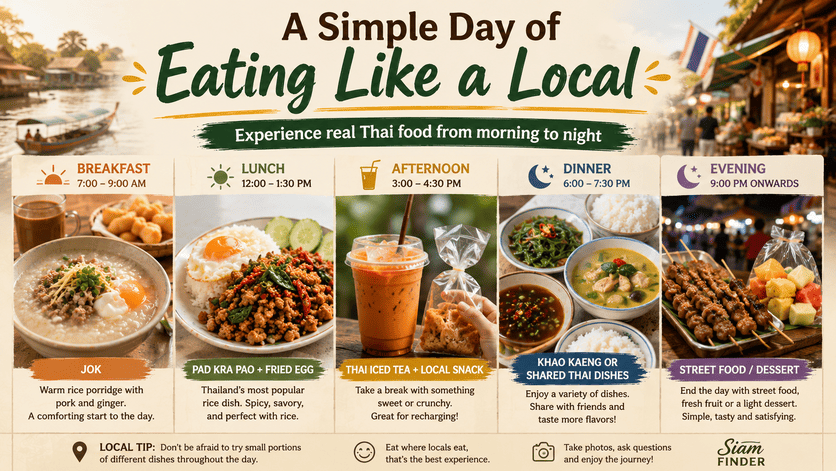
Want to experience everyday Thai food during your trip?
Try a simple food journey.
Breakfast: Jok or Moo Ping with sticky rice
Lunch: Pad Kra Pao with rice and a fried egg
Afternoon: Thai iced tea and a local snack
Dinner: Khao Kaeng or several dishes shared with friends
Evening: Fresh fruit or a street-food snack
This is not a strict “Thai food itinerary.” It is simply an example of how you can move beyond the usual tourist menu and experience different types of everyday food.
Start With Everyday Food, Then Explore Further
You do not need to begin your Thai food journey with the most famous dishes.
Start with what feels comfortable. Try a rice dish. Order noodles from a local shop. Visit a food court. Walk through a morning market. Watch what local people are ordering.
Then gradually move beyond familiar choices.
Thai food is not one style or one flavor. It changes across regions, communities and even individual neighborhoods.
The best way to discover it is not to ask, “What is the one Thai dish I must try?”
Instead, ask:
“What do people here actually eat?”
That question can lead you to a much more authentic experience of Thailand.
FAQ: Everyday Thai Food
What food do Thai people eat every day?
Thai people commonly eat rice dishes, stir-fries, curries, noodles, soups and simple grilled or fried foods. Meals are often quick, affordable and easy to find near homes, workplaces and markets.
Do Thai people eat Pad Thai every day?
Not usually. Pad Thai is a well-known Thai dish, but everyday meals are often more varied. Rice dishes, noodles, curries and stir-fries are common choices.
What do Thai people eat for breakfast?
Breakfast can include Jok, Khao Tom, noodles, grilled pork with sticky rice, or other foods purchased from local markets and street vendors.
Is everyday Thai food spicy?
Not necessarily. Some dishes are very spicy, while many everyday dishes can be mild. You can also ask for less chili or no chili when ordering.
What is the easiest Thai food for first-time visitors?
Khao Man Gai, Khao Pad, Pad Kratiem, Khao Moo Daeng and Jok are good starting points for visitors who want familiar and relatively mild flavors.
Where can tourists find everyday Thai food?
Look for local food courts, neighborhood restaurants, morning markets, noodle shops and street-food stalls. Shopping malls often have food courts with many choices in one location.
What does “mai phet” mean?
“Mai phet” means “not spicy.” It is one of the most useful Thai phrases for travelers who prefer mild food.
Is Thai food expensive?
Everyday Thai food can be quite affordable, particularly at local stalls and food courts. Prices increase in tourist areas, upscale restaurants and hotels.
What should I order at a local Thai restaurant?
If you are unsure, start with a rice dish, noodle dish or stir-fried meal. You can then explore curries, regional dishes and more adventurous flavors.
How can I eat more like a local in Thailand?
Instead of visiting only restaurants that serve famous Thai dishes, try local food courts, neighborhood noodle shops, morning markets and everyday rice dishes. Pay attention to what local customers are ordering and use that as inspiration.